
How Likely Am I To Get Into Oxford Or Cambridge?
The Oxbridge Success Calculator has had 100,000 data points from students across the world who want to know what their Oxbridge chances are.
Why?
Oxford and Cambridge are world-leading universities, renowned for being incredibly competitive to get into and we are all human, we want to know how likely we are to get into Oxford and Cambridge and how we compare with others, especially when there are limited offers available for every degree.
Find out what your Oxbridge success rate is and receive your personalised report.
What is the UniAdmissions’ Oxbridge Success Calculator?
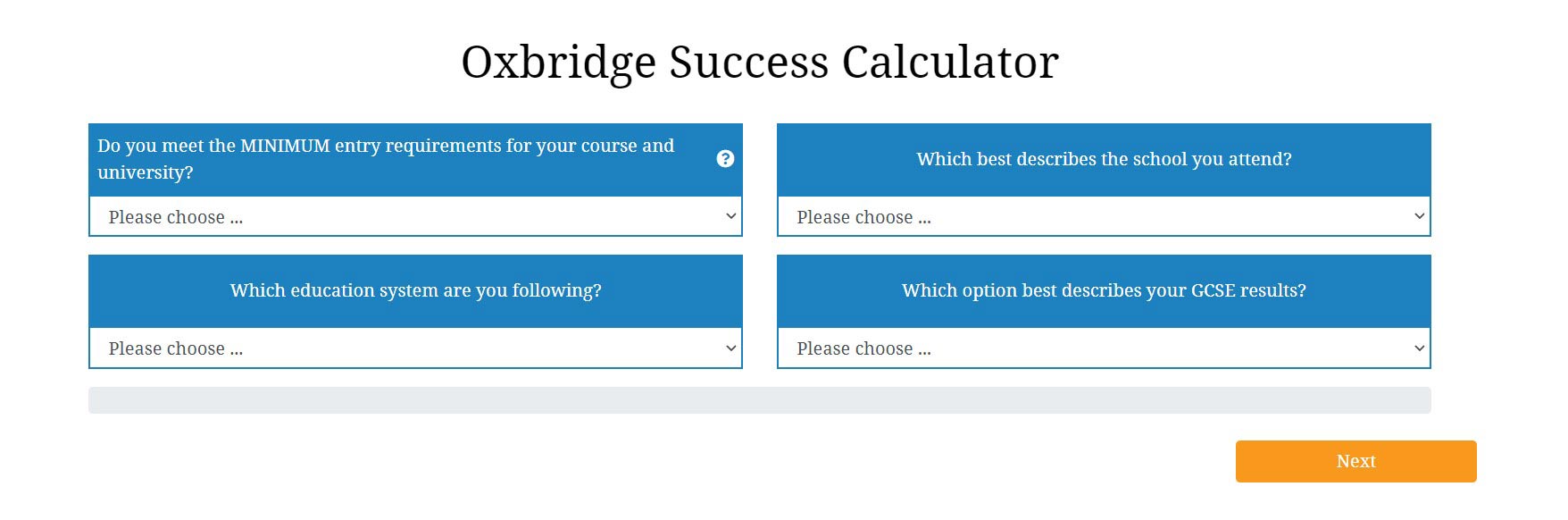
The Oxbridge Success Calculator asks you questions based on factors that improve or decrease your chances of success (which we explain later on).
We use these factors to produce a final bespoke percentage of success for you, along with a personalised report, which you receive immediately after completing the questions.
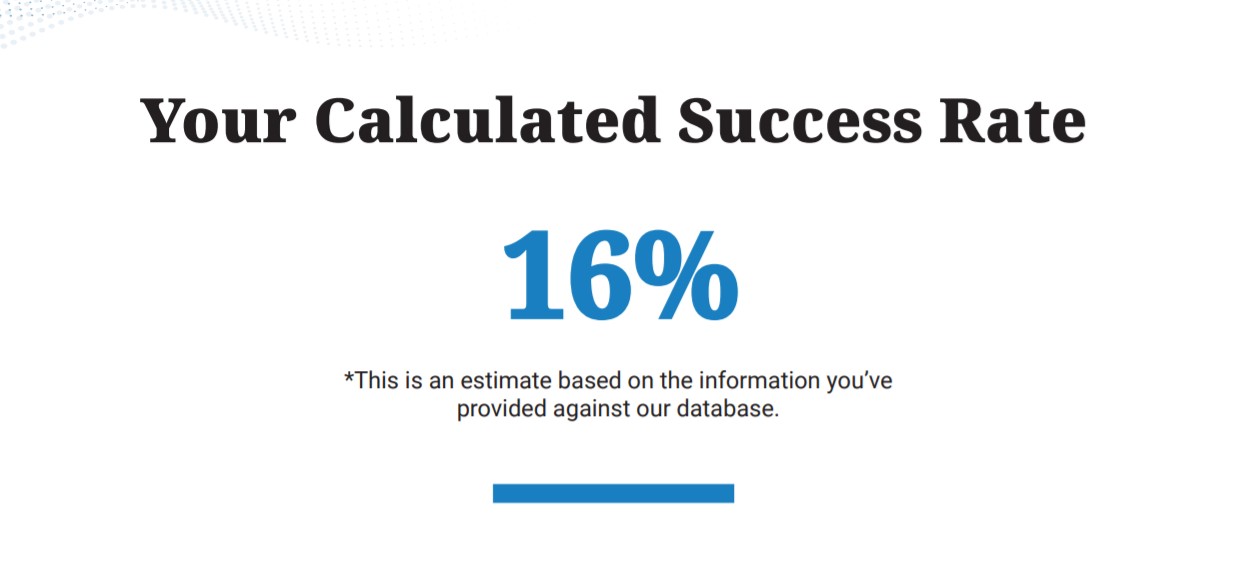
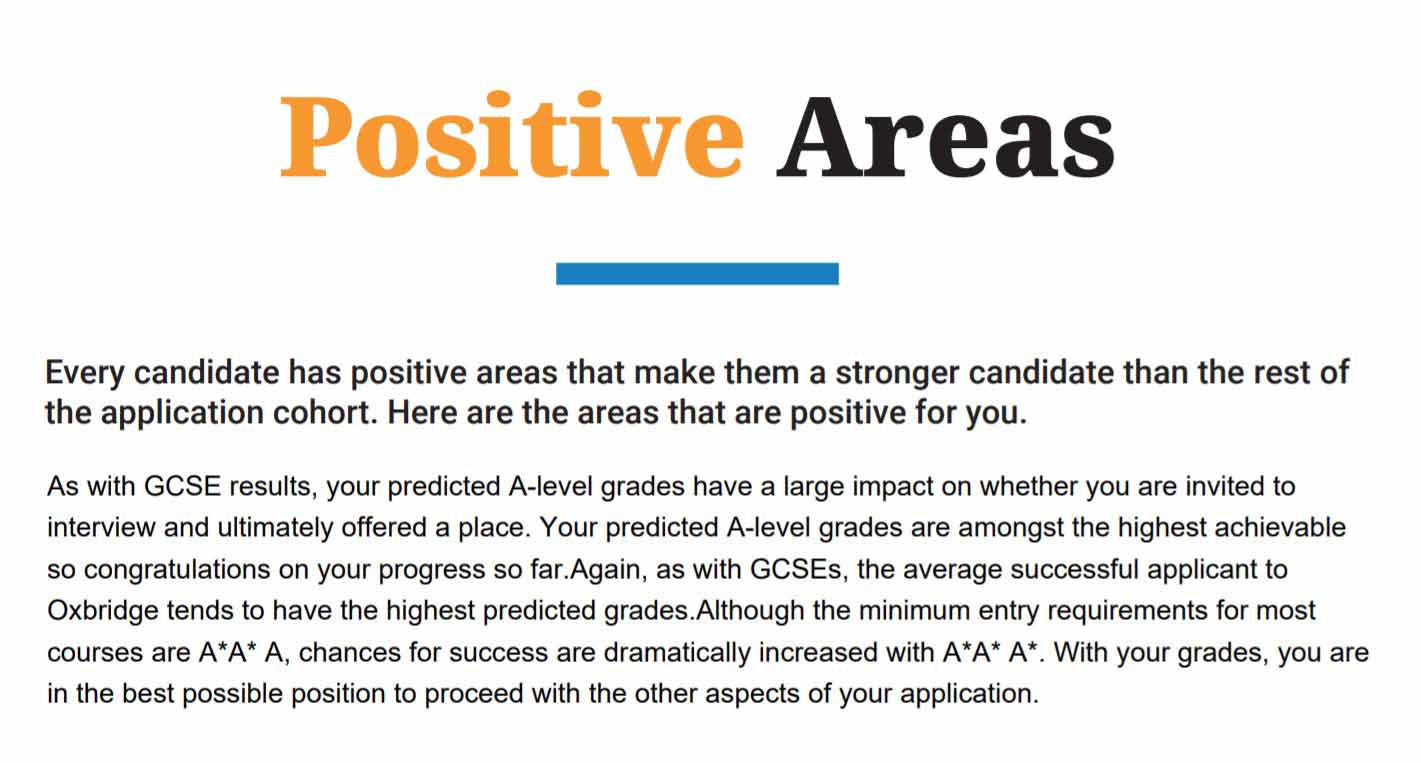
The report explains how we calculated your chances of success, and it takes you through your positive areas, such as having high predicted A-levels, followed by areas of improvement, which could include a lack of work experience.
We then explain what your results mean and provide you with recommendations on the support you may need to increase your chances of success.
What are my chances of getting into Oxford or Cambridge?
How competitive is Oxbridge?
Oxford and Cambridge Universities are both notoriously competitive to get into. Using 2024 admissions statistics (figure 1.), we can see that overall, undergraduate applicants had less than a 20% chance of gaining a place.
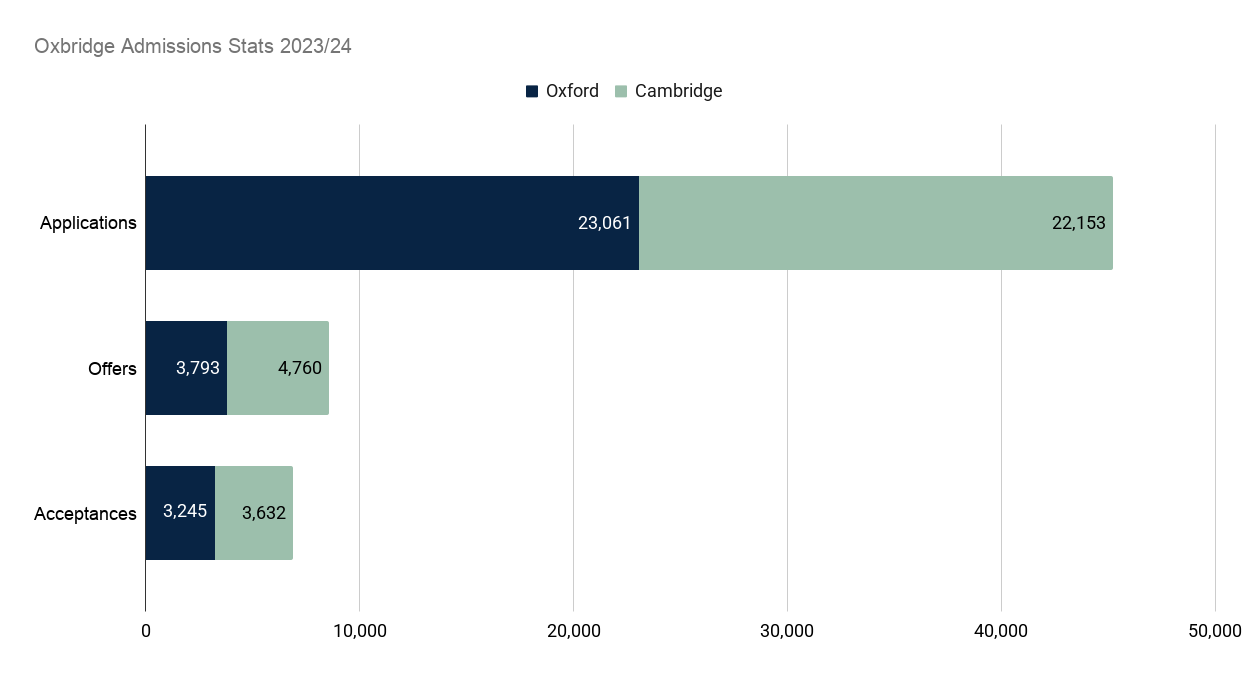
Figure 1. Oxford and Cambridge 2024 Cycle Admissions Statistics.
How likely am I to get into Oxford or Cambridge?
To answer the question directly, the overall chances of getting into Oxbridge is less than 20%, but to get an offer from Oxford as an undergrad, it is just just 16%, and for Cambridge, it is 21.5%. The odds are not in your favour unless you have an incredibly strong application. We will cover what improves your chances later on.
How competitive are the Oxbridge Courses?
It’s helpful to know the overall Oxbridge offer success rates, but the chances of gaining an offer for individual Oxbridge subjects are more beneficial and relevant to you. Medicine, Law, Engineering and Economics are four of the top courses at each university.
In 2024, the undergraduate statistics show that for Economics and Management, only 93 of the 1,517 applicants gained an offer (6.1%). While other courses were less competitive than this,
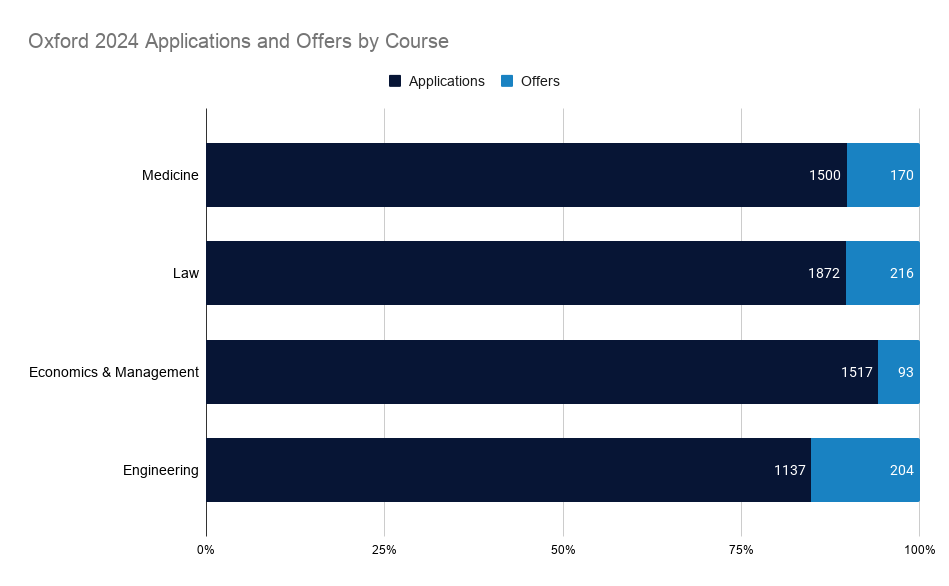
Figure 2. Oxford University 2024 Cycle Undergraduate Courses Admissions Statistics.
At Cambridge, most of the top subjects are slightly less competitive than Oxford, but offer fairly low rates. These ranged from 12% to 18% in 2024. There also aren’t the most competitive courses at the university, as Computer Science had an even lower offer rate of 9.4%.
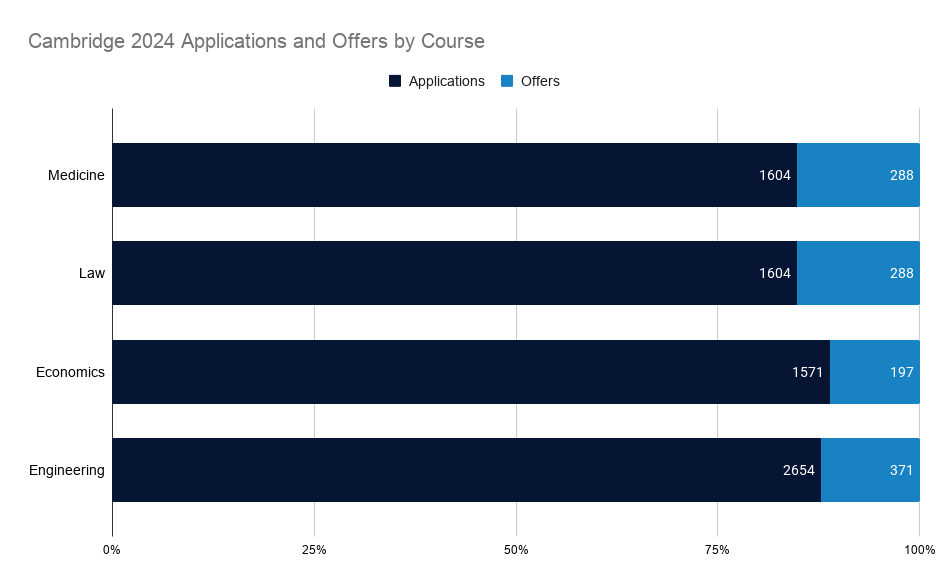
Figure 3. Cambridge University 2024 Cycle Undergraduate Courses Admissions Statistics.
Now you know how competitive Oxford and Cambridge are, find out your chances of success by clicking the button below.
What makes up an Oxbridge Application?
Now we know how competitive Oxbridge is, let’s have a look at what makes up an Oxbridge application, before we go into what factors improve or decrease your chances of success.
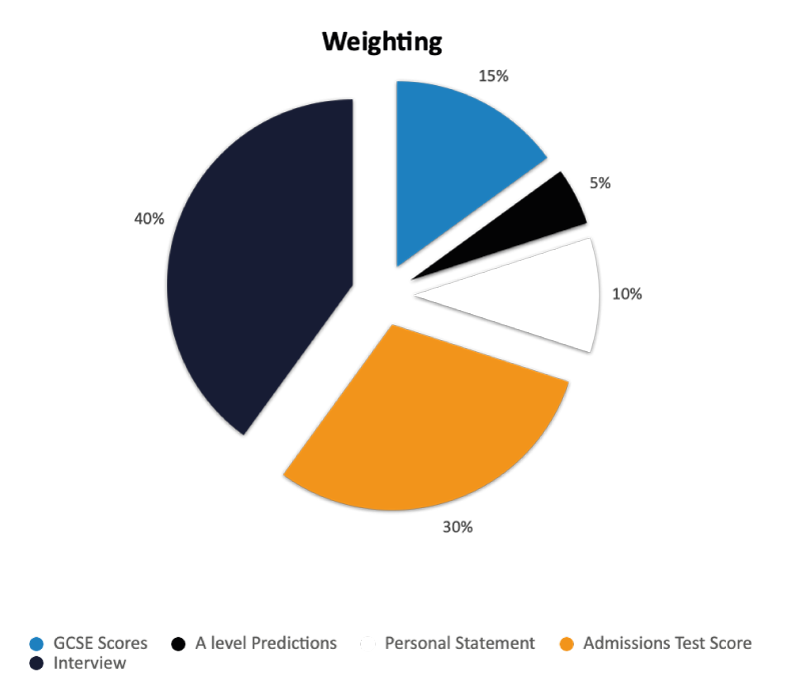
There are five main components that make up an Oxbridge application. These components include your School Grades, UCAS Reference, Personal Statement, Admissions Test score and Interview performance. When looking at the importance of each component, generally Admissions Tests, Interviews and School Grades are weighted at 30%, 40% and 20% respectively. The last 10% covers your Personal Statement, Work Experience/Wider Reading, References and Letters of Recommendation etc. It pays to do well on your Admissions Tests, School Grades and Interviews to increase your chances of receiving an offer.
Where does our data and information come from?
We strive to make our assessments as accurate as possible which ultimately means spending a great deal of time trawling through Oxford and Cambridge’s websites and admissions statistics along with investigating FOI requests.
Our calculator is an informative tool so while the calculations are based on statistical data collected from thousands of applications and from the resources mentioned above, it is important to remember that the calculator does not guarantee a precise measure of success. Care should be taken to interpret the results in context.
What factors improve or decrease your chances of Oxbridge success?
The UniAdmissions’ Success Calculator asks you questions based on the main areas that improve or decrease your chances of Oxbridge success. Let’s break down these main areas and you’ll then be able to understand why we ask the questions in the Calculator.
1. Minimum entry requirements, predicted A-levels and School type
Minimum Entry Requirements and Predicted A-levels
Oxford and Cambridge have minimum entry requirements for all of their degrees for a reason. If you are not able to meet them, then it is highly unlikely you will be able to cope academically with the course, particularly as these are minimum entry requirements and most Oxbridge applicants will be applying with higher grades than the minimum.
Using Oxford’s Economics and Management Degree as an example, in 2024 there were 93 offers given out but 1,517 students applied (7% offer rate). The entry requirements were A*AA and looking at Freedom Of Information requests, we saw over 90% of offer holders had predicted grades above this requirement, with A*A*A and A*A*A*A* being the most common grade profiles recorded.
School Type
Asking which school you attend might seem a surprise to you. Below we break down the 2024 admissions statistics for Oxford and Cambridge home applicants and focus on how your school type affects your chances of Oxbridge success.
Oxford State School Application Statistics 2024
Applicants: 10,258
% of Total Applicants: 69.8%
Offers: 1,964
% of Total Offers: 65.6%
Acceptances: 1,668
% of Total Acceptances: 63.9%
Acceptance Rate: 16.3%
Oxford Private School Application Statistics 2024
Applicants: 3,852
% of Total Applicants: 26.2%
Offers: 933
% of Total Offers: 31.1%
Acceptances: 851
% of Total Acceptances: 32.6%
Acceptance Rate: 22.1%
Cambridge State School Application Statistics 2024
Applicants: 10,074
% of Total Applicants: 69.4%
Offers: 2,524
% of Total Offers: 70.5%
Acceptances: 1,897
% of Total Acceptances: 68.2%
Acceptance Rate: 18.8%
Cambridge Private School Application Statistics 2024
Applicants: 3,593
% of Total Applicants: 24.8%
Offers: 901
% of Total Offers: 25.2%
Acceptances: 776
% of Total Acceptances: 27.9%
Acceptance Rate: 21.6%
It is a well-known fact that some Oxbridge Colleges (more so for Oxford) will admit proportionally more private school students, making it slightly more competitive for state school applicants. While improvements have been made, it’s still clear that private school students have a slight advantage.
2. GCSEs Results, Work Experience, Oxbridge applicants from your school
GCSEs Results
It is fairly well known that the majority of successful Oxbridge applicants have some of the best GCSEs across the UK. GCSEs are always considered at Oxford and Cambridge as unlike predicted grades, GCSEs show real previous performance. Realistically, if you are applying to Oxbridge, you need at least eight 8/9s GCSEs. Why? Using the same example as earlier, remember that only 6% of Oxford E&M applicants received an offer out of the 1,517 students that applied. Looking at the applicants’ GCSE grades, the average number of 8/9 grades was 8.1. This increases to 9.1 for offer holders and 9.6 for accepted students. So, if you don’t have a wide profile of high GCSE grades, you’re chances of success drop significantly.
To reiterate what we said earlier with predicted A-levels, there were 13% of applicants achieving way above the usual eight 8/9s for GCSEs, but still only 7% of applicants received an offer. You really need to be one of the best in the bunch. Of course GCSEs are just one part of the components that Admissions Tutors look at, but it helps to be backed up with strong grades when the subjects are so competitive.
Work Experience and Wider Reading
For some Oxbridge degrees, such as Medicine, work experience is mandatory. Using Cambridge as an example to explain why work experience is necessary, the University states the following as the ‘Key Qualities of a Medical Student’:
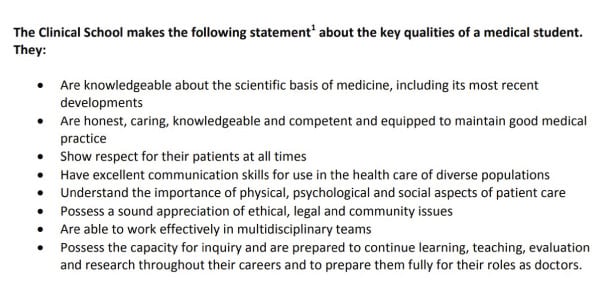
Cambridge Medical Admissions mentions ‘have excellent communication skills for use in the health care of diverse populations’. To demonstrate this, you could include work experience from placements on a ward or from volunteering regularly at care homes, interacting with residents and attending to their needs. You need clear evidence to demonstrate how you meet these key qualities.
Wider reading is critical when applying to Oxbridge and both wider reading and work experience are mentioned in your Personal Statement and Interviews. Both can also demonstrate your passion and dedication to the subject and they are a great way to show your understanding of the field.
Wider reading should always be relevant, so look at the admissions criteria for your chosen degree, like the key qualities shown above. Speaking of which, in that list, Cambridge mentions ‘possess a sound appreciation of ethical, legal and community issues’. To make your wider reading relevant, you could include your independent reading into ethics to strengthen your application. Wider reading is also used in Admissions Tests. For instance, during the Cambridge Law Test, you are expected to show your breadth of knowledge by reading about current affairs.
During your university Interviews, the classic Oxbridge question is “tell me something interesting you’ve read recently”. This can be the key to a successful Interview or the downfall. It is a great opportunity for you to show your passion by discussing an interesting and relevant topic that you covered during your wider reading.
For those that have not done wider reading or work experience for certain degrees, your chances of gaining an offer are incredibly low because you have not shown evidence of interest and passion for your chosen degree, especially compared to your fellow applicants who will have invested a lot of their time into independent, outside of the syllabus studying.
Number of Oxbridge Applicants
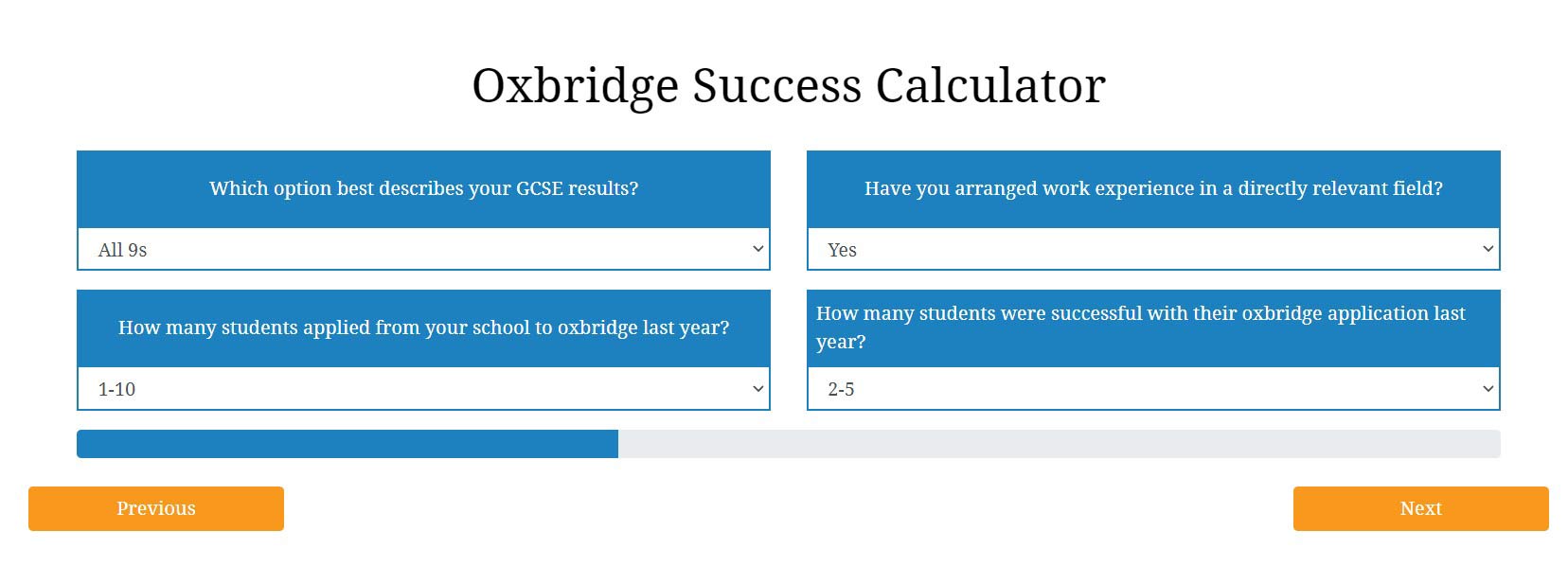
Why have we asked how many students applied from your school, or were successful? Schools that regularly apply to Oxbridge are usually better equipped to deal with your Oxbridge application. This will increase your chances of success and will be increased even more so if students consistently gain an Oxbridge place from your school.
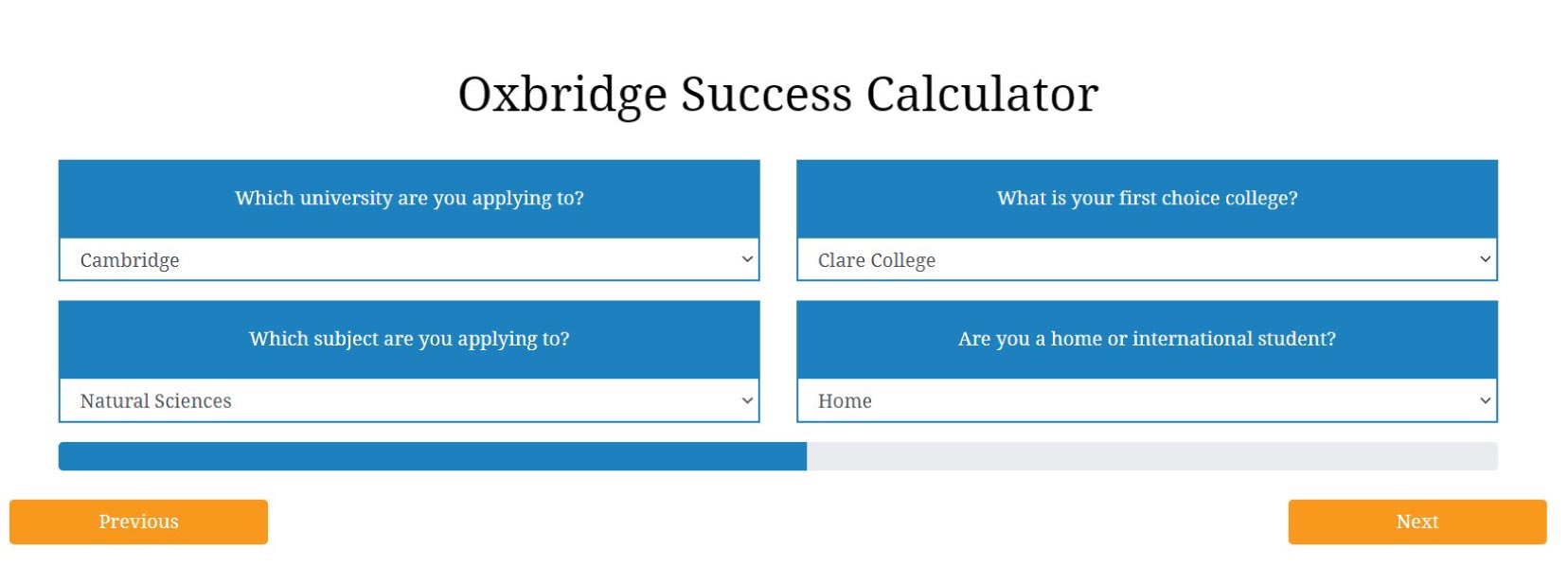
3. The Oxbridge University, The College and The Subject
The Oxbridge University
The reason the Oxbridge University you choose affects your chances of success should be quite clear now. As we covered earlier, 16% of Oxford applicants received an offer which is 5% lower than the 21% of Cambridge applicants that received an offer. So from a very reductionist point of view, those applying to Cambridge have a higher chance of receiving an offer.
We say it is reductionist because we are not including other factors such as the number of those who applied. A further key point to remember is that Cambridge generally Interviews around 70% of applicants, which gives those who perform well in Interviews a better chance. Oxford on the other hand usually Interview less than 40% of applicants.
The Oxbridge Subject
Why the subject you choose affects your chances of success should also be quite clear too. Not all degrees have only 6% of applicants gaining an offer, like Oxford’s Computer Science and E&M degrees. For instance, Oxford’s Classics degree gives offers to 40% of their applicants. Again, this is also due to other factors such as the number of applicants and the size of the subject’s intake.
The Oxbridge College
The reason why we ask about your first-choice college is because some colleges are more competitive to get an offer from. For example, King’s College, Cambridge had 774 applicants in 2024, and 20% received an offer, compared to Gonville and Caius where 17% of the 1,181 applicants received an offer.
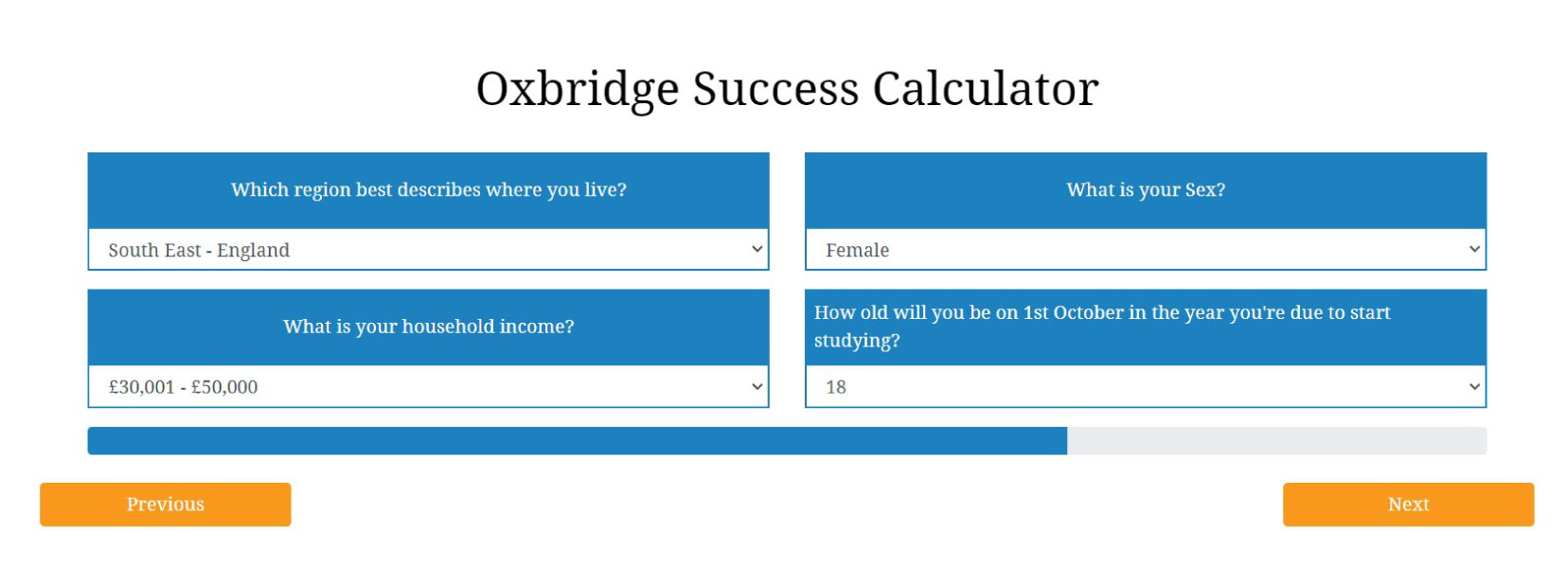
4. Region, Gender, Household Income and Age of starting study
Region
How does the region I live in affect my Oxbridge Success? Cambridge provides a pie chart that shows the distribution of applicants from different regions in the UK.
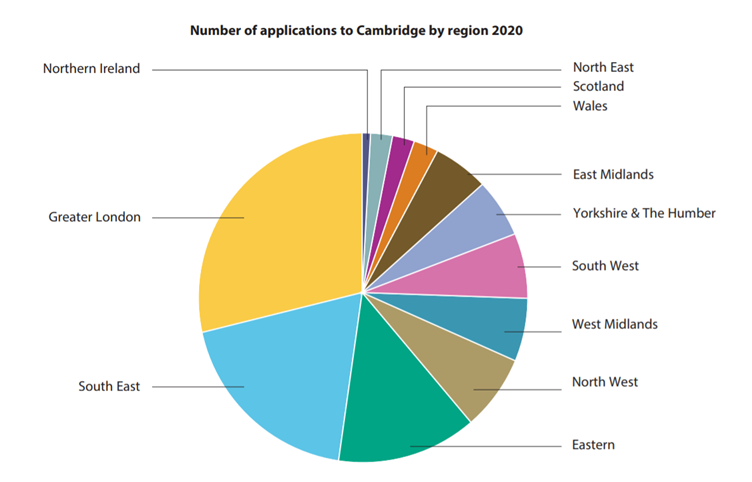
Figure 4. Distribution of UK Cambridge applicants using Area of Permanent Residence (APR) codes, provided by UCAS.
From this chart, it is clear that the more affluent regions in the UK (Greater London, South East England and Eastern England) take up a large percentage of the Cambridge applicants (29%, 19% and 13% respectively). But how does this relate to the offer success rate?
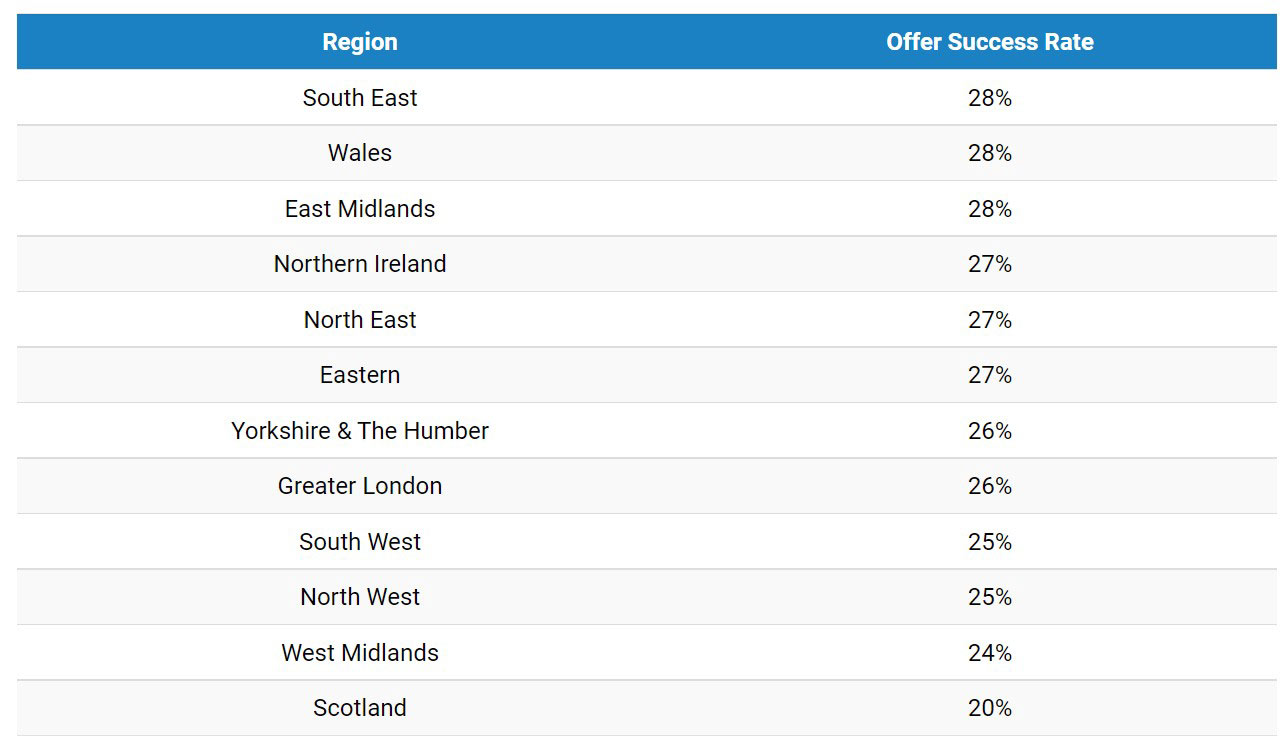
From the offer success rate, it does not vary too significantly except the comparison between Scotland and the South East. The reason why we included this in the Calculator is because if you put your location in as Scotland, your success score for Cambridge would likely vary from someone applying from Wales.
Gender
Why do we ask about gender? The best way to explain this is to look at the admissions statistics. Using Oxford’s 2024 admissions statistics, there were 11,283 female applicants with 1,924 offers given (17.1%) compared to 11,287 male applicants with 1,755 offers given (15.5%).
Household Income
You may think that household income is irrelevant and maybe too personal, however, the success rate varies for students from different socio-economic backgrounds. Cambridge uses IMD data (Indices of Multiple Deprivation), which is for applicants that are flagged if they live in a neighbourhood that is ranked within the most deprived 40% of areas within their UK region.
If we look at offer rates for IMD flagged and unflagged applicants, flagged applicants have a 24% chance of receiving an offer and 21% chance of acceptance, compared to unflagged applicants who have a 27% chance of receiving an offer and 24% chance of acceptance. It is clear from the data that unflagged students have a higher chance of success so generally, the lower the household income, the lower chances of success.
Age of Starting Studies
You might be wondering why we ask what your age will be when starting your Oxbridge studies. It is also a factor that affects your chances of Oxbridge success. Let’s look at the Home Admissions Statistics for Cambridge in 2024 and break it down by age.
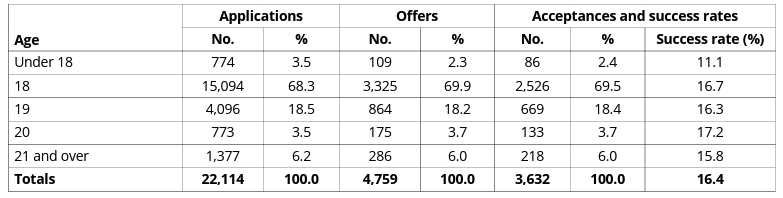
For those applying to start their studies before they are 18, it is much more competitive than those at 20. The reason why applying at 21 is more competitive than at 18, 19 and 20 is because you are then classed as a mature student and therefore will apply to mature colleges, and the 21 and over category is very broad, with candidates applying to Oxbridge in their 70s.
5. Personal Statement, Admissions Tests and Interviews
Your Oxbridge chances of success are heavily affected by your Personal Statement, Admissions Tests and Interviews. The Personal Statement is a written piece submitted to UCAS that is up to 4,000 characters long. It’s all about you and your interests and evidence for why you would like to study at Oxbridge and why you are suited to the subject. This is where you include your wider reading and work experience. Universities use your Personal Statement as a way to find out more about you as there is only so much that a set of grades can indicate. Admissions Tutors will look for your motivation, passion, suitability and evidence of interest to make sure you are the right student for the degree.
Admissions Tests are used to determine a candidate’s potential to achieve in an academically demanding undergraduate degree course. The tests are designed to challenge applicants to allow Admissions Tutors to differentiate effectively between academically able applicants, including those who may have achieved the highest possible grades in school exams.
Interviews are usually the last stage of the application process. This is where you will meet Admissions Tutors who will ask you questions about your application, current affairs, motivation and depending on the degree you are applying to, you may be tested at Interview such as with maths questions or problem-solving questions. Interviews are used to identify your suitability and passion for the degree, to see if you are the right student to study at the university and if you will work well with the university staff too, whether that is tutors, supervisors or lecturers etc.
Writing a strong Personal Statement that really demonstrates your suitability and passion for the subject, along with a high Admissions Test score and supported with a good Interview performance exponentially increases your overall success rates.
You should now have an idea as to why we ask the questions we do on the Calculator, how competitive Oxbridge is and the factors that improve and decrease your chances of Oxbridge success.
There’s only one thing left to do.
Find out what your chances are and receive your personalised report.